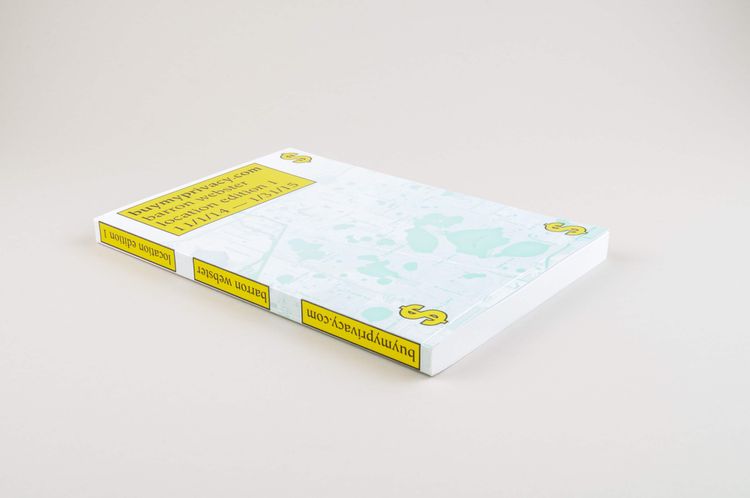
“Buy my privacy is a series of products generated from ‘semi-private’ information that is not generally publicized, but is nonetheless not private in the purest sense; as it is sent to and used by organizations who build the software we use. This information is turned for a profit by selling our ‘private’ habits to advertisers.
These data are generated by algorithm, for algorithm. They are sent back and forth as JSON objects, unix epoch dates, and other formats; but the habits they reflect are deeply human, albeit mediated by our keys, mice, and thumbs. They contain our habits, our thoughts, our movements, our little eccentricities, and if we do a bit of deciphering, much, much more—our relationships, our occupations, our passions, our goals. This wealth of human information can also be ours to do with what we wish. To demonstrate this, I (Barron) have begun to sell my ‘semi-private’ information to other humans to decipher and learn about me as a human. This information is not just a data point in a banner ad targeting algorithm” (Barron Webster, “Buy my Privacy,” website).
Buyers of the books may also receive an entire HTML package of the data represented in the books. The third volume of the series, History Edition, is no longer available on Blurb. It contains every site Webster visited on his computer.
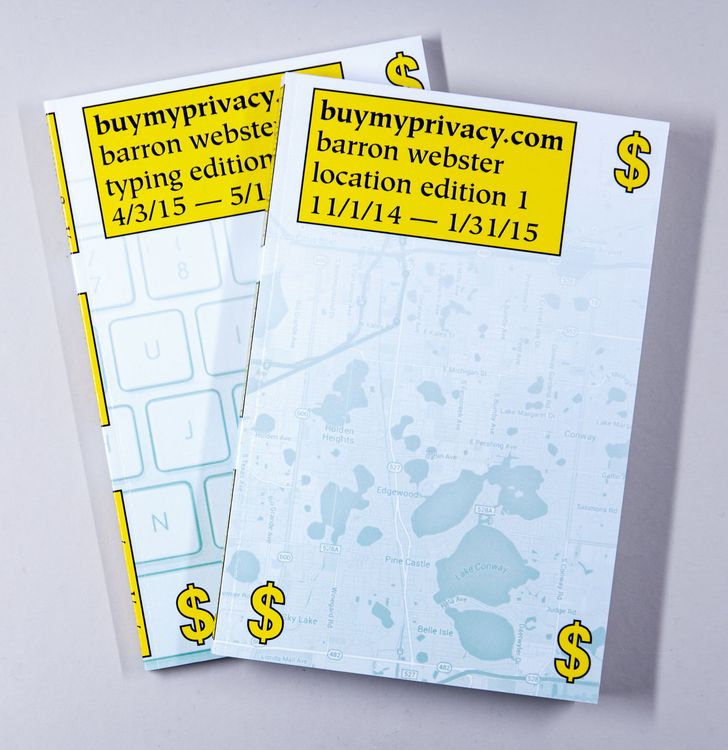
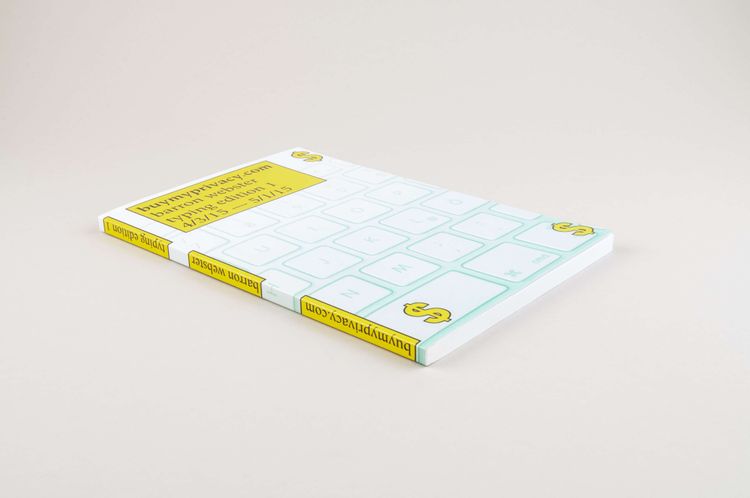
The Typing Edition was the first book in the series. It records every key Barron Webster pressed on his computer, including the software program within which the key was pressed, from April 3 to May 1, 2015. The project is reminiscent of Julian Palacz’s End Tell.
The first page of our copy contains an error that probably occurred when the author created the PDF: On this page, the book is erroneously announced as “internet history edition 1.”
The Location Edition is the second volume in the series. It lists every place Webster visited from November 5, 2014 to May 5, 2015, with the movement patterns for each day recorded on a map. It is reminiscent of James Bridle’s Where the F**k Was I?
The preface in our copy erroneously refers to the third volume and announces the author’s entire internet history as the contents of this volume, with the title and URL of the websites visited and the visit times.